Stainless steel
 Stainless steel term covers a wide range of steel types and grades for corrosion or oxidation resistant applications, in relation to the conventional ordinary steels. The enhanced corrosion resistance of stainless steel is essentially derived from the addition of at least 11% (Cr) chromium. However, most commonly used stainless steel containing about 18% (Cr) chromium. Other important elements include the mixture of nickel (Ni) and for more demanding anticorrosive properties the mixture contains molybdenum (Mo).
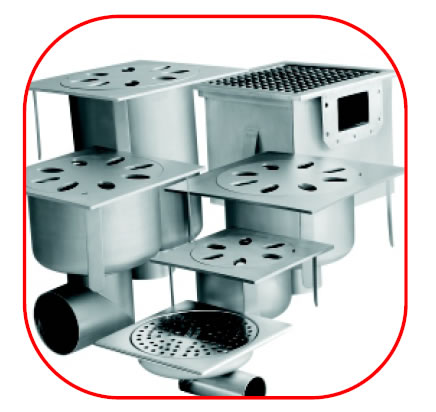
The austenitic steel used in RNT's drainage systems is mainly the AISI 304 stainless steel grade, which is a chromium - nickel alloy with capacity of approximately 18% chromium and 10% nickel. Non hardened, antimagnetic and weldable, suitable for oxidized environments. In more demanding applications chromium - nickel - molybdenium stainless steel AISI 316 grade is used with capacity of approximately 17% chromium, 12% nickel and 2.2 % molybdenum. It's non - hardened, antimagnetic and molybdenum improves the oxidation resistance. Suitable for marine environments.
The austenitic steels are ideal for applications such as:
- Slaughterhouses and meat processing industries
- Fish market
- Cheese and dairy industries
- Wineries
- Oil industry
- Food processing, caterings
- Professional kitchens in restaurants, hotels etc.
- Locker rooms, bathrooms, toilets
- Public buildings and institutions as hospitals etc.
- Pharmaceutical and chemical industries
Furthermore austenitic steels are non-magnetic in contrast to the ferritic steels and consequently the magnetic particles are not attracted to the surfaces of systems that would otherwise be encouraged for contamination and corrosion. Ferritic steels are generally not suitable for drainage systems.
Concluding stainless steel is an attractive and modern material whilst at the same time being hygienic, easily cleaned and highly corrosion resistant. It has low maintenance requirements, good strength, is easily fabricated and recyclable.
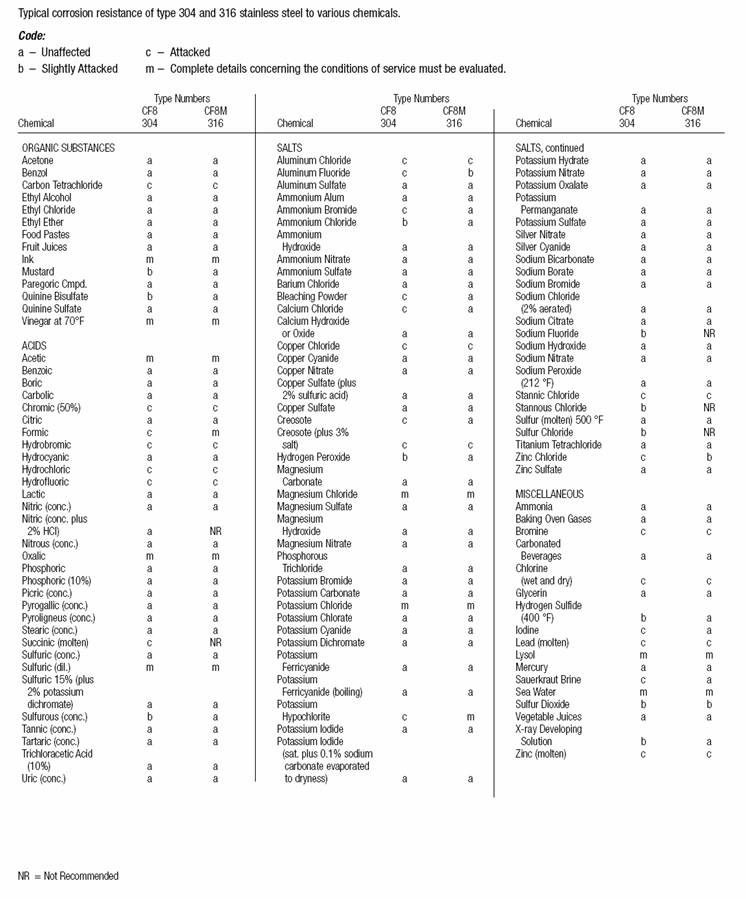
The following table shows the corrosion behavior of stainless steels 304 and 316 in various chemicals.
Products
Search
Loading class selection
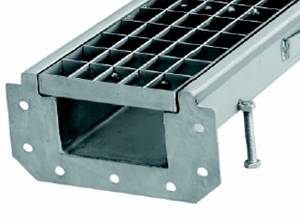
According to the European standards EN 1433 drainage channels and their gratings are divided into load classes A15 to F900. More information for these classes please visit here>>
Drain traps loading selection
The European standards "Gullies for buildings'' EN 1253 describe in detail the minimum technical construction characteristics of the drain traps. For more information on these classes please visit here>>
Technical Catalogue
You can download RNT's technical catalogue for the stainless steel drainage systems in pdf format here >>